Own your shop's intelligence. Put it to work.
Your shop's experience has value. That value should stay with your business and help your people on the next job.
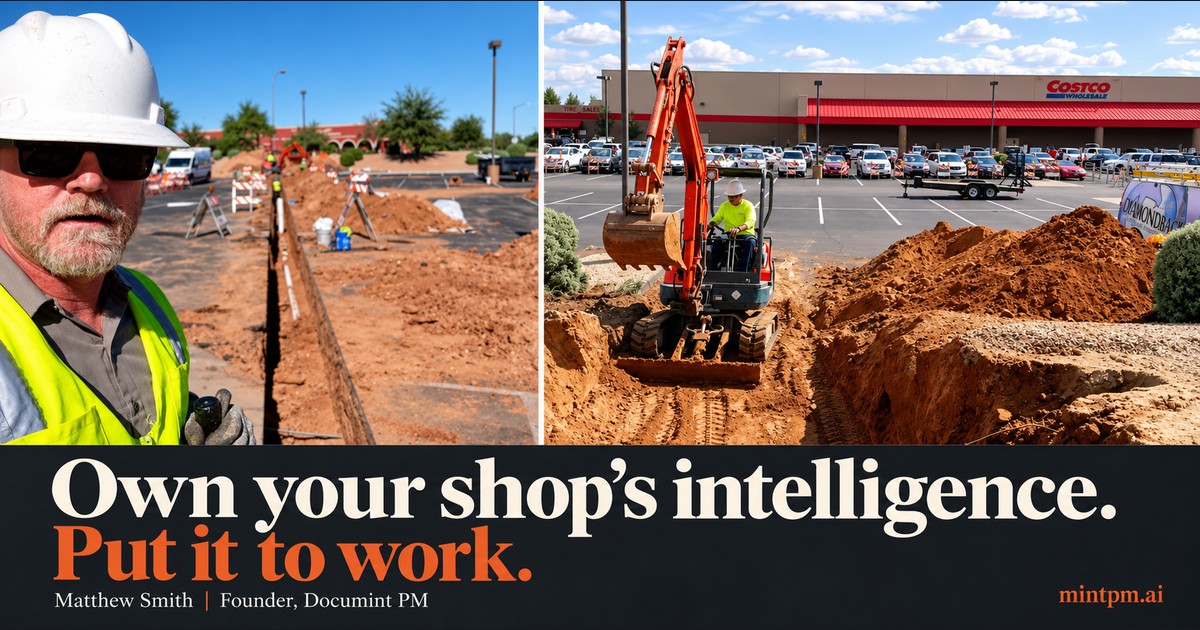
Field work, shop knowledge, keep both
Think about what happens when someone says, “Call Mike. He's worked on that before.”
Mike knows the equipment. He remembers the customer, the access problem, and the part that looked right in the catalog but didn't fit. He can save someone hours with a five-minute conversation.
That knowledge came from doing the work. Your shop paid for it through labor, troubleshooting, callbacks, and the time it took to get things right.
But Mike is on another call. Or on vacation. Or he retired last month.
What happens to the work while everyone waits for an answer?
Most shops have some version of this problem. Good people know what to do, but their experience is difficult for everyone else to reach when they need it. Pieces are in service records, emails, photos, job files, and conversations. Someone still has to find them and understand what applies.
Meanwhile, the clock keeps running.
Someone in your shop has solved this problem before, but the person doing the work today doesn't know what they did. They call around, search old emails, and ask the owner for help. Work slows down while everyone looks for an answer the shop already had.
Those hours belong to people who could be moving the work forward.
Reaching the right person at the right time.
Your shop's knowledge becomes useful when it reaches the person making the decision, while there is still time to act.
Consider a crew preparing for a swap out. The schedule says they are ready. The material is ordered. The customer expects the work to happen. But the last time your shop worked at that location, access required an arrangement that took several days. The person who handled it remembers. The new team doesn't know to ask.
If that lesson reaches the team early, they can make the arrangement and keep mobilization on schedule. If it surfaces when the truck arrives, they are already spending time recovering.
The lesson is the same. When the team learns it changes its value.
Where Documint PM fits.
DPM connects existing job records and field updates to help your people understand what matters to the work in front of them. They can ask about a project, a customer, or a previous decision and get a plain answer with sources they can check.
- What happened last time?
- What do we need to account for before sending the crew?
- What changed, and what does it affect?
DPM is built to help carry that context into the current plan, flag drift, and propose a recovery. The people responsible for the work make the call.
Time gives them options. Labor puts margin at risk.
An answer that arrives before dispatch can be worth far more than an explanation after the hours are spent.
Lessons you've paid for more than once.
Every shop has lessons it has paid for more than once. A purchasing mistake. An overlooked approval. A service callback that could have been avoided. An installation sequence that worked well but never made it beyond the crew that figured it out.
Often, what went wrong and how the team recovered never make it into an email or the job record. They should. People fix the problem, get the work moving, and turn to the next thing. What they learned stays with the people who were there. The next crew has no record to learn from, and the shop pays for the same mistake again.
DPM helps your team capture what happened, what they did to recover, and what the next crew should know. That includes lessons people share through field updates and conversations, as well as information already in the job files. When a similar problem comes up, that experience can help the team avoid the mistake or use a solution that worked before.
Over time, that knowledge can support more of the shop. A newer technician has somewhere to start. A foreman can prepare with more context. A PM can trace a decision without calling five people. An owner can see where the work needs attention and where the team needs support.
Experienced people still matter. Their judgment becomes more useful when others can learn from it and they spend less of their day answering the same questions.
You decide who sees what.
Your shop decides who can access which information in DPM. For example, a technician can have access to the service history and instructions needed for an assigned job, while company financial information stays restricted to the people you authorize. Giving someone access to DPM does not give them access to everything the business knows.
Your team also stays in charge of decisions. DPM reads from your existing systems without changing them. When it prepares a message or proposes a change, your team reviews it. Nothing sends until you approve.
The goal is practical: keep the work moving, protect productive hours, and keep the knowledge your business creates with the business.
Start with one workflow.
Start by connecting DPM to one workflow where you need a clearer picture of what's happening and better results. It could be scheduling crews, ordering material, or reducing callbacks. Choose one, define what needs to improve, and put DPM to work.
Bring that to a 30-minute conversation.
Your shop has spent years building its experience. Put it to work.
Book a 30-minute working session with Matt.
Tell us about your shop, pick a time, bring one workflow you want a clearer picture of. No pitch deck.
Book a conversation